Rachael Schwabe: How did you arrive at your flesh paintings in the first place?
Irin Mahaparn: I think it was more of a formal attraction to the quality of flesh and meat. In the initial paintings I was using raw chicken meat as a reference, and I think there's just something so grotesque but also beautiful about it: these wonderful, beautiful passages [of] purples and pinks in the flesh [that] then get into creamy raised areas of fat. Also, at the time I was vegan, so there was a sort of morbid fascination with this thing that reminded me of the human form. There's just something so repelling, but also really familiar with it that drew me in and made me want to see what would happen if I painted various configurations.
RS: I've seen bits and pieces of your work around your apartment before. And what's interesting to me is [that] it seems like you also started refracting the meat against itself a little bit. It almost has a kind of collaged look, they are really visceral works.
IM: Yeah, I think collaging is a good term. I actually didn't start off with these big guys, I started off with smaller explorations. I think the collaging aspect that really comes from the same impulse to try to abstract this thing and kind of create another world, another microcosm out of it. I'm taking a bit of this chicken that's maybe really only this big, but then really isolating it against that black background and trying to create [a] representation of flesh that was both familiar, but abstract[ed] so that people can project their own experiences into it. The fracturing that happens with the larger pieces is just an extension of that.

Irin Mahaparn, Flesh I, 2017. Oil on canvas. http://www.irinmahaparn.com/.
IM: This need to know my familial path more—I think I've stayed away from it for so long, because in school, as a non-white person there was sort of this assumption that I would be making work about that. I didn’t want to talk about my immigrant experience in my art, but I think because some [of my] instructors expected me to.
I was born in Thailand, and I moved [to the United States] when I was seven. [We] left pretty much all my immediate family or my extended family in Thailand, so the only people who moved here were myself, my two sisters and my mom and my dad. I had a great aunt and uncle who lived maybe 50 miles away when we moved here. We weren’t able to visit family at all for a good ten years, so they would have to come to us.
There was this period of the 1990s where you thought that if you wanted your kids to speak fluent in English, that they could only learn one language at a time, otherwise it would interfere with their learning. So, there wasn't a big push to really keep the Thai language in our family. I can speak Thai fairly fluently and I can understand it, but because [we moved] when I was seven it's kind of stopped at that level.
When family would come over my ability to communicate with them in a weak way was [also] really kind of limited, so much so that it created anxiety for me whenever they would come. It was nerve wracking to have to compute these two languages. To this day, you know, I think [this] was a barrier that prevented me from getting to know them better.
My grandparents have since passed away and I hear these stories about their lives and their immigrant stories too. I have this desire to…collect these old histories and to know these aspects of my own family path and maybe catch up in in a very belated way. Artmaking is [a] language that I'm personally familiar with and is sort of a less direct way of confronting those histories and stories. It's my own way of making extensive history and processing it for myself. That's the direction I'm going in right now, but it's still very much in the seedling stage.
The flesh paintings and [my] current work seem disparate in my mind. But I think the through line there is this affective quality in the painting, but also this desire for empathy. Empathy between yourself and this foreign object, but also, at least in this case, empathy [in] my attempt to understand and feel into people who aren't there, across time and space.
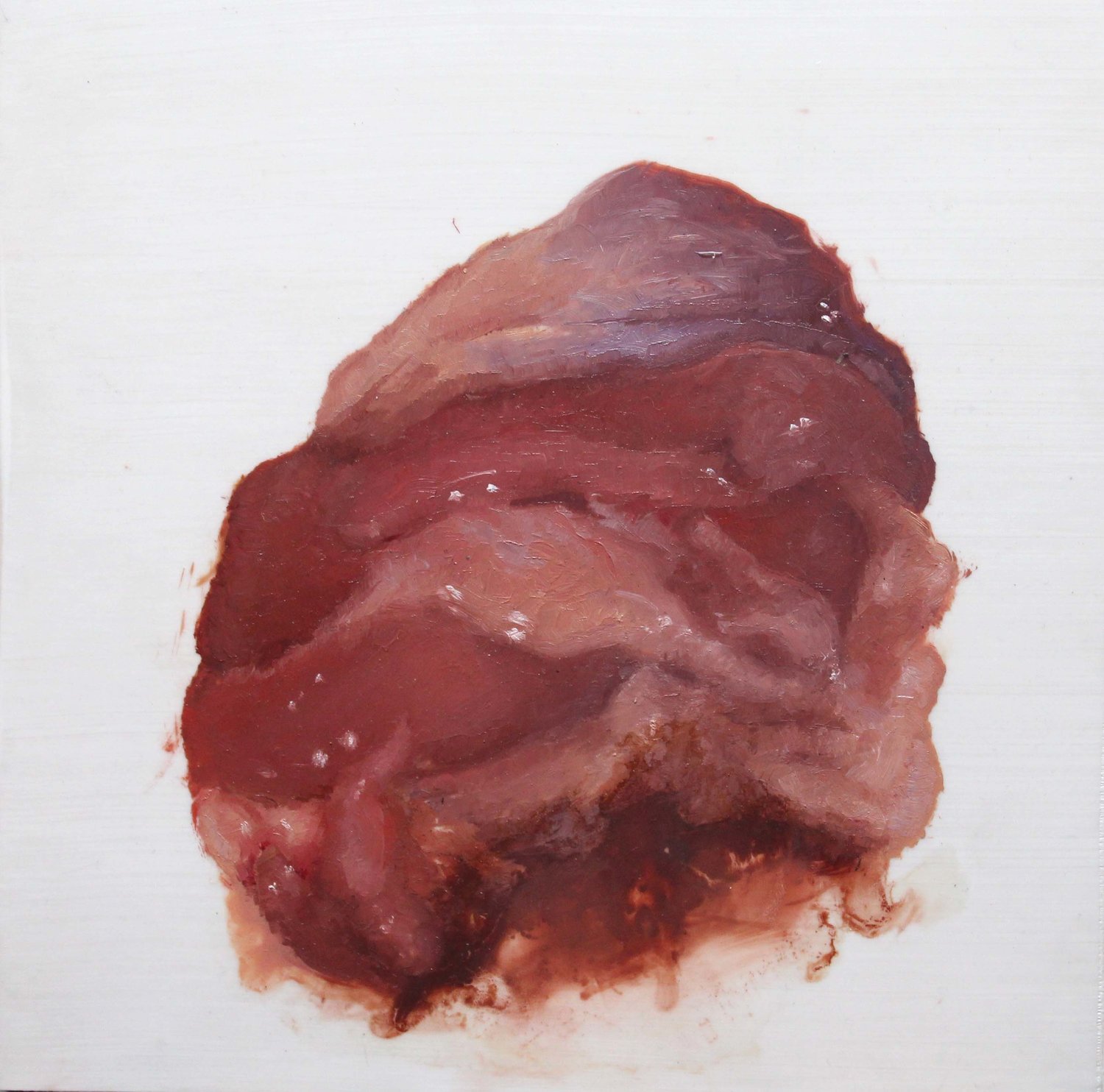
Irin Mahaparn, Flesh Study, 2017. Oil on canvas. http://www.irinmahaparn.com/.
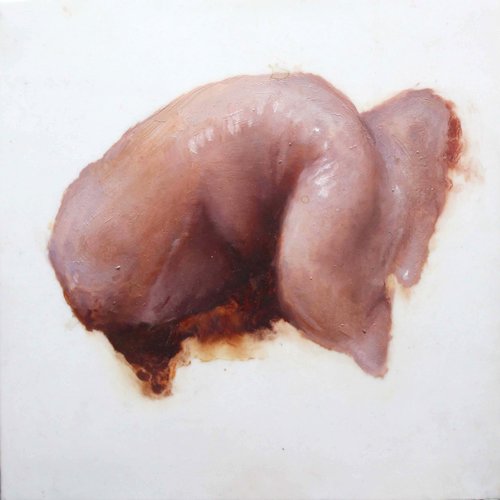
Irin Mahaparn, Flesh Study, 2017. Oil on canvas. http://www.irinmahaparn.com/.
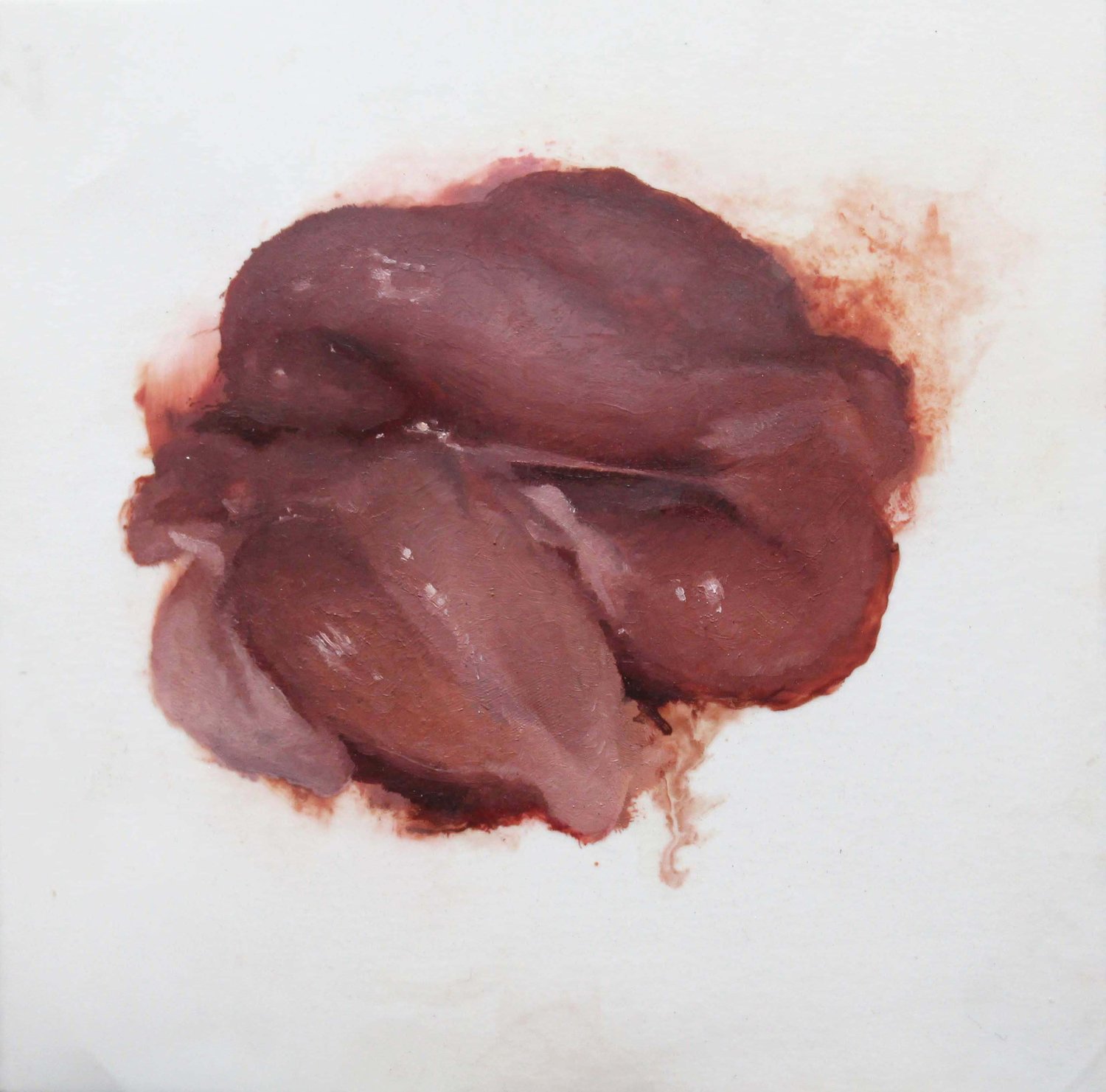
Irin Mahaparn, Flesh Study, 2017. Oil on canvas. http://www.irinmahaparn.com/.
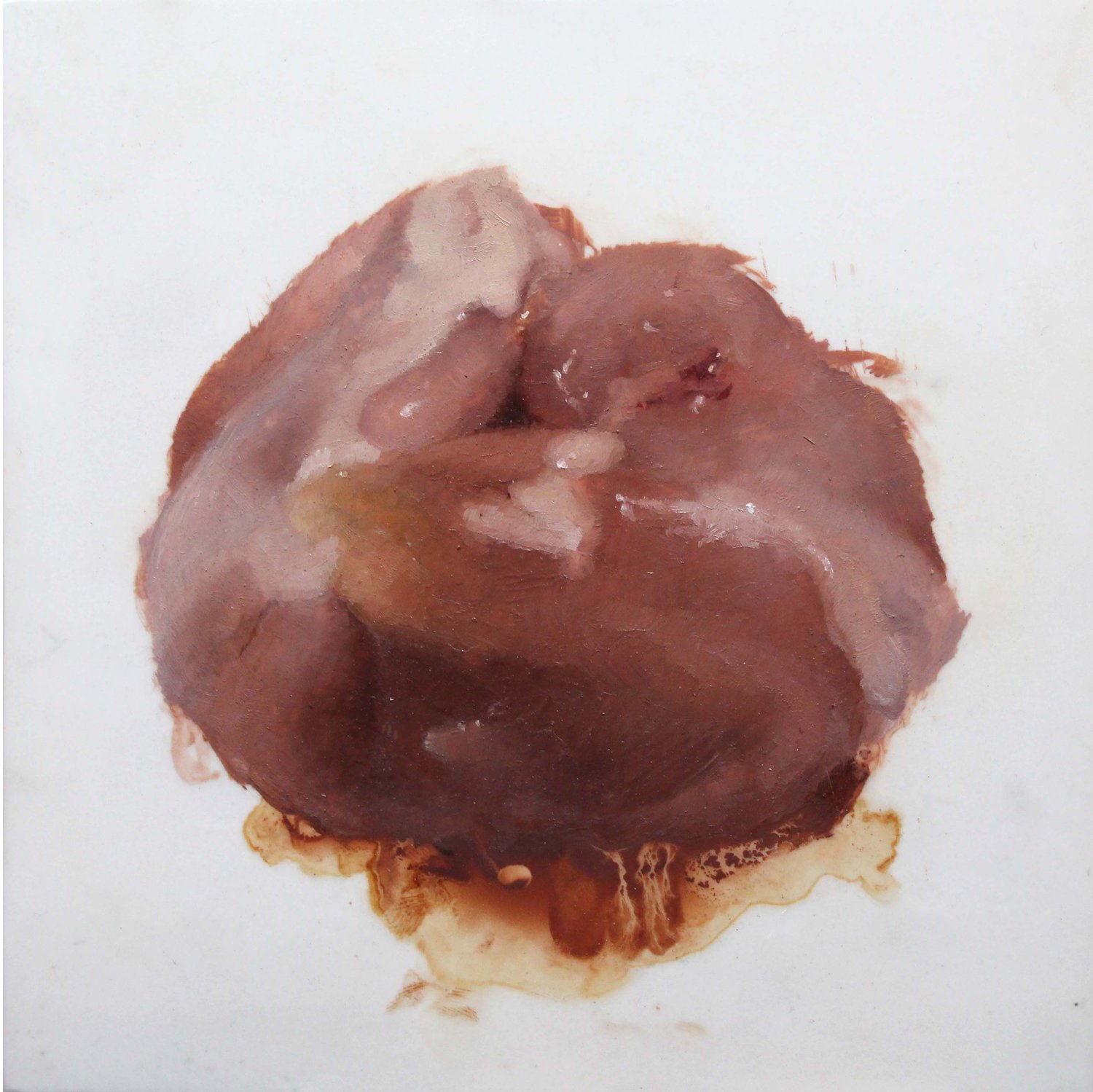
Irin Mahaparn, Flesh Study, 2017. Oil on canvas. http://www.irinmahaparn.com/.
IM: I think when you're making work and putting it out there or in whatever form, I think there's two layers to it, right? It's kind of what people see and what they bring to the table, and they look at your art and these opportunities for empathy that you want to create for people. In creating this work, I haven’t ever used the right word, but I wanted to put something out there that was familiar to the body that [people] could relate to. How can I create these experiences of familiar connection for my audience, or whoever looks at it?
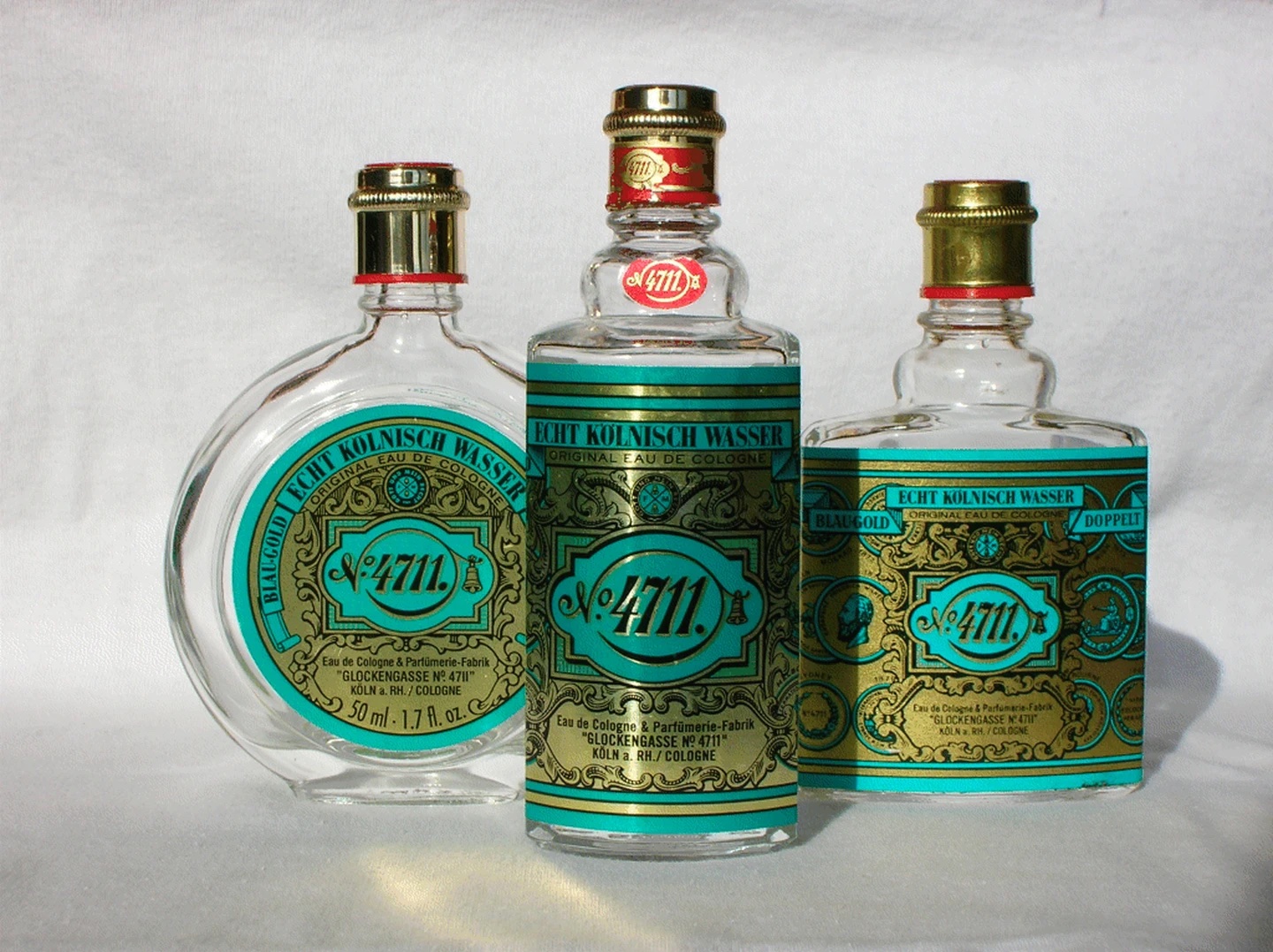
I'm seeking out an empathetic connection between myself and perhaps an imagined past or, or people in my life that I didn't get to know well and wished I knew better. This usually isn't a part of my practice at all, but I was kind of just trying anything. Now I'm recording oral histories from my own family. In one of my conversations with my parents, which don't happen super formally. I'm lucky they live close they live in Connecticut, [and] I take opportunities to kind of ask them like, “What was grandpa's favorite thing.” You know, random, one-off questions. It's funny watching them talk about it because I think for them it also conjures a trip down memory lane for them you know into this person too. The last time I saw them they my mom mentioned that my grandpa wore this very specific cologne, and it was called 4711 Cologne and it was something that all these old folks in Thailand would [wear] every day. And my dad was like “Oh yeah, we had that in our household too.” I looked more into it, and it's actually a German Cologne—it was one of the first colognes I think ever created in the world in like the 1700s. And it has a fascinating history. 471 was named after the house it was traded in and it's [still] the same formula that they use to this day, and it apparently has this weird cultural significance. So, I ordered some and it I just actually got it in the mail today. So, this is what it looks like.
RS: Oh, that's a really beautiful bottle.
IM: It came in this packaging and I [sent a picture] to my mom. And she said, “Oh yeah, that's the bottle that he had.” They haven't changed like the packaging since.
RS: How does it smell?
IM: I was really curious about that because I bought it not really knowing what it smells like and my hope was that opening [its smell] would [be] strongly connected to this memory center or brand, right? I was really hoping that I would take a whiff of it, and it would bring back some long lost, deeply lodged memory of my grandfather. I opened it this morning and I smelled it, and it is familiar, but it didn't—I don't know what I was expecting. It's weird, it is definitely not an unfamiliar smell. I know I've smelled it before but it's not tied to one person. It's a little floral, it's really light. I put it on myself and went for a walk today. It's super humid [outside] and every now and then I get like a whiff of it. This is why they use this in a tropical country. This makes a lot of sense now that it was in like every household in Thailand is just so commonly used. When I texted my mom she was like, “Oh yeah, you might think it's familiar, because this is something that they put into little linen napkins at Chinese restaurants in Thailand." As an object, I think it has a really fascinating history and I want to see what happens if I use this as a painting medium because it does have a pretty high alcohol [content]. I want to find a way to physically incorporate it into my work, even though it's going to be a very ephemeral thing.
RS: That's so interesting. I guess my mind is thinking like historian, but I could see a fascinating paper about that history [because it has] the dimensions of personal and political or public, and an intersection of those two in one person. Having the smell be familiar, but maybe not intimate if that makes sense, is also really fascinating.
IM: I love that phrase, I had to write it down. It smells familiar but not intimate. I think that describes a lot of my relationships with my family in a weird way and perhaps in this larger sense, maybe empathy as well. Empathy for stranger is an attempt to find something familiar, some common ground, some understanding, but it's not an intimate understanding it and [may] never be.